Udacity Reviews often come down to one question: can this platform actually help you gain skills that are useful at work?
Udacity is an online learning platform offering project-based Nanodegree programs and free courses in AI, programming, cloud computing, data science, and web development. Programs include mentor feedback, peer community support, industry partnerships with Google and Amazon, and accredited credentials. Pricing ranges from free courses to $300-$1,500 monthly subscriptions with 55% coupon codes available.
Pros
- Industry-reviewed projects with mentor feedback ensure portfolio-ready work and real-world skill development.
- Accredited Nanodegree credentials carry employer recognition unlike generic online certificates.
- Curriculum built by Google, Amazon, and other tech leaders reflects actual job market needs.
- Active peer community and mentor support keep learners accountable and prevent isolation.
Cons
- High pricing at $300-$1,500 monthly makes it expensive even with coupon codes applied.
- Rigid curriculum structure limits customization compared to modular course platforms.
Udacity takes a more career-focused approach than many online learning websites. Its catalog centers on Artificial Intelligence, Data, Programming, Cloud, cybersecurity, digital marketing, product management, and related technology subjects. The platform combines lessons with practical projects, expert feedback, career coaching, and certificates for completed Nanodegree programs.
The biggest issue is price. Udacity’s current individual subscription costs $249 per month, while its four-month bundle costs $846 upfront. The bundle gives a 15% discount for the first four months.
That is considerably more than many online course websites charge.
So what are you getting for the money?
In this Udacity review, we look at its course selection, projects, mentors, career tools, pricing, free learning options, beginner-friendliness, pros and cons, and the type of learner who is most likely to get good value from a subscription.
Udacity at a Glance
Feature | Our Rating |
|---|---|
Course selection | 4.6/5 |
AI and technology courses | 4.8/5 |
Project-based learning | 4.8/5 |
Mentor support | 4.6/5 |
Career resources | 4.5/5 |
Ease of learning | 4.4/5 |
Pricing | 3.7/5 |
Beginner suitability | 4.2/5 |
Overall value | 4.5/5 |
Best for: Learners who want practical technology skills, structured programs, and portfolio projects.
Less suitable for: Casual learners who want inexpensive individual courses or permanent access after making a one-time payment.
What Is Udacity?
Udacity is an online learning platform focused on technology and career skills.
The company began after Stanford instructors Sebastian Thrun and Peter Norvig offered an online Introduction to Artificial Intelligence course. More than 160,000 students from over 190 countries enrolled in that original course, helping inspire Udacity’s broader education model.
Today, Udacity is part of Accenture and reports more than 16.9 million registered users across 240+ countries. Its current site also lists 500+ courses, more than 700 industry experts in its mentor network, and more than 2.6 million projects submitted.
The platform has a clear focus. Instead of offering thousands of unrelated subjects, it concentrates on skills connected to technology and modern careers.
That focus makes Udacity easier to assess. If you want to learn programming, AI, data, cloud, or a related professional skill, there is plenty to look at. If you want cooking, photography, music theory, or history courses, this is not the platform built for you.
How Udacity Works Today
Udacity previously sold access to individual Nanodegree programs and courses separately.
Its current All Access subscription changed that model. Subscribers can access the wider Udacity catalog while their membership remains active. This lets learners move between programs and individual courses without purchasing another subscription for every subject.
That can be useful when your learning plan changes.
Suppose you start a data science program and discover that your Python skills need work. You can add programming material from the catalog instead of paying for another standalone program.
The same idea works for AI, cloud, programming, and business-related subjects.
You are essentially paying for access to a large technology learning library rather than buying one course at a time.
What Can You Learn?
Explore Udacity’s learning categories and Nanodegree programs covering AI, machine learning, programming, cloud computing, data science, web development, and business skills in this comprehensive Udacity review.
1. Artificial Intelligence
AI is one of Udacity’s strongest areas.
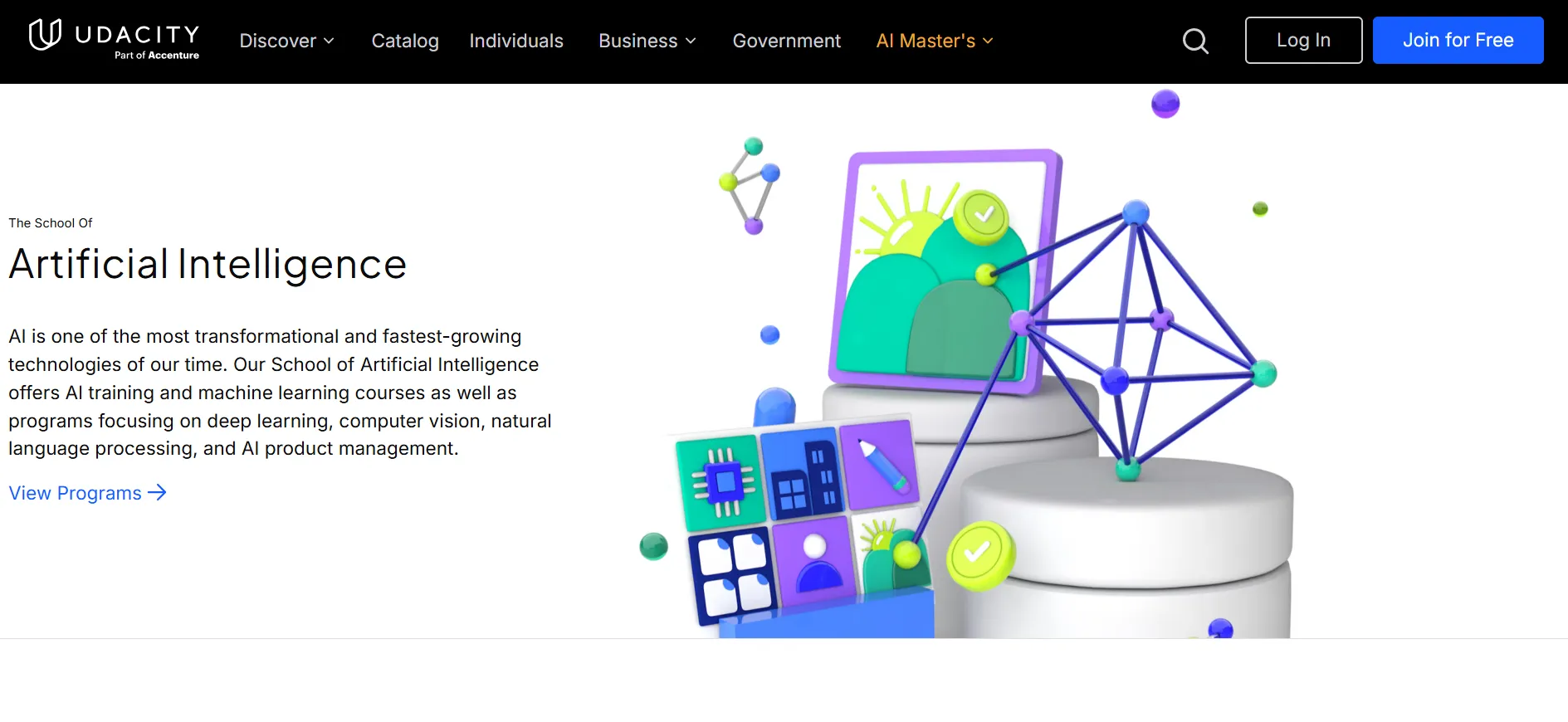
Current options cover subjects such as:
Generative AI
Agentic AI
Machine learning
Deep learning
Natural language processing
AI programming
AI product management
Machine learning engineering
AI for business
Udacity’s current AI section also separates technical learning from courses designed for people who want to understand or apply AI without becoming AI engineers. Beginners can start with foundational AI and generative AI material before moving into more technical programs.
This range is helpful because AI attracts learners with very different backgrounds.
A software developer may want to build AI systems. A manager may want to understand how AI affects business. A beginner may simply want to learn the basic concepts.
Udacity has courses aimed at all three groups.
2. Programming
Programming remains a major part of the platform.
The catalog includes subjects such as Python, C++, web development, and programming fundamentals.
One current example is Udacity’s Introduction to Programming Nanodegree, which is listed as a beginner program with approximately 109 hours of content. It includes projects involving HTML, CSS, Python, and programming fundamentals. Udacity says project submissions are reviewed by industry professionals.
That makes the program more practical than a simple collection of introductory videos.
3. Data
Udacity has courses and Nanodegrees for data analysis, data science, data engineering, business analytics, SQL, Python, and related skills.
This is another area where the project format can help.
Instead of only reading about data analysis, students can work with datasets and complete projects that require them to apply what they have learned.
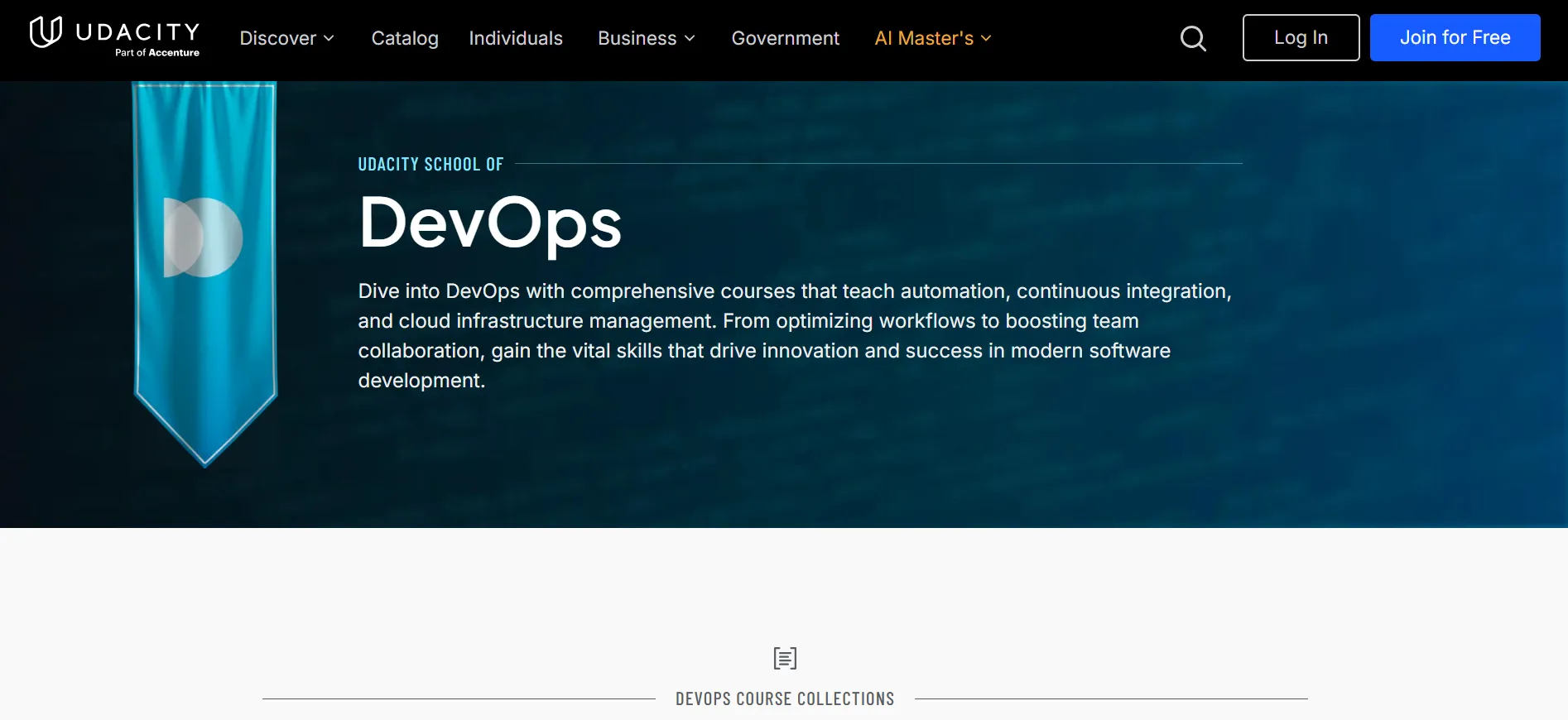
4. Cloud and DevOps
Cloud computing and DevOps have been part of Udacity’s technology curriculum for years.
The current catalog includes AWS-focused learning and programs related to cloud infrastructure, data engineering, and development operations.
These subjects are useful for IT professionals, developers, and people trying to move into cloud-focused careers.
5. Product Management and Digital Marketing
Udacity also has options outside pure technical development.
Learners can study product management, AI product management, digital marketing, and business analytics.
This makes the catalog more useful for professionals who work with technical teams but do not spend their entire day writing code.
The Project-Based Approach
Projects are arguably the biggest reason to choose Udacity over a basic video-course subscription.
Udacity’s current subscription page specifically promotes hands-on projects with expert feedback. It also describes its learning model around practical skills and work that can be demonstrated to employers.
This changes the learning experience.
You are not simply watching someone explain Python and then moving on to the next video. A structured program may ask you to use Python to build something yourself.
The same approach appears throughout technical subjects.
For learners trying to create a portfolio, projects can be more useful than collecting dozens of course completion badges.
There is also a practical benefit to having your work reviewed. If you make an error or approach a task poorly, feedback can show you where your work needs attention.
How Good Are Udacity Mentors?
Udacity currently lists 700+ industry experts in its mentor network.
The platform’s model is not built around having a personal teacher sit beside you throughout the course. Instead, learners work through material independently and receive expert support around projects and learning challenges.
This is a good middle ground for people who want independence but do not want to learn entirely alone.
It also suits working professionals.
You can study when your schedule permits and seek support when you need it rather than attending fixed classroom sessions.
Udacity for Beginners
Udacity can be beginner-friendly, but you should not assume every program is designed for someone starting from zero.
The catalog contains introductory courses as well as advanced programs.
A beginner who has never programmed should probably start with an introductory programming course before jumping into a machine learning engineering program.
The course descriptions usually indicate the expected level.
The current Introduction to Programming Nanodegree, for example, is labeled Beginner and covers foundational programming skills.
For AI, Udacity also provides introductory courses such as Generative AI Fluency and Discovering Artificial Intelligence and Machine Learning for learners without a technical background.
This makes it possible to build up gradually.
What About Advanced Learners?
Advanced learners may get even more from Udacity.
If you already understand programming, you can skip introductory material and focus on areas such as machine learning, generative AI, cloud engineering, data engineering, or other specialized subjects.
The platform’s current catalog is updated frequently, and Udacity says it adds new content on an ongoing basis.
That matters in technology education because tools and methods can change quickly.
A course library that never changes can become less useful over time. Udacity’s focus on newer AI topics gives the platform a way to keep its catalog relevant to current technology work.
Certificates and Portfolio Building
Udacity provides certificates for completed Nanodegree programs.
These certificates can be added to a resume or professional profile, but they should not be treated as equivalent to a university degree.
Their bigger value comes from what you actually build during the program.
A hiring manager may care more about seeing a working project and hearing how you solved a problem than seeing another certificate listed on a resume.
Udacity’s current subscription page says learners earn program certificates and can use them to showcase their skills.
For that reason, we would treat the certificate as a supporting item rather than the main reason to enroll.
Career Coaching and Interview Preparation
Career resources are another part of the paid experience.
Udacity currently lists personalized career coaching and interview preparation among its subscription benefits.
This is useful for people who are learning with a job change in mind.
You may finish a technical program and still wonder how to present your new skills to employers. Career guidance can help connect your learning with resumes, interviews, and job applications.
Still, Udacity cannot guarantee employment.
A course can give you knowledge and projects. Your job search will still depend on your previous experience, portfolio, interview skills, location, and the roles available in your field.
Udacity Pricing Review
Udacity’s price is both one of its biggest weaknesses and one of the easiest things to understand.
The current individual subscription options are:
Plan | Price | Billing |
|---|---|---|
Monthly | $249/month | Monthly |
4-Month Bundle | $846 total | Paid upfront |
The four-month bundle saves 15% compared with paying the standard monthly price for four months.
Let’s do the math.
Four months of monthly billing would cost:
$249 × 4 = $996
The four-month bundle costs:
$846
That means the bundle saves $150.
Its effective monthly cost is $211.50.
For someone who already knows they will spend four months studying, the bundle is the obvious price winner.
The monthly plan is better if you want to test the platform or do not know how long you will stay.
Is Udacity Expensive?
Yes, compared with many online learning services.
The important question is whether the extra cost buys something you will actually use.
If you only need a two-hour introduction to Python, paying $249 for a month of access may not make sense.
If you spend four months completing a Nanodegree, working on projects, using mentor feedback, taking extra courses, preparing for interviews, and using career coaching, the calculation looks different.
Udacity is priced more like a professional development service than a bargain course marketplace.
That is reasonable for some learners and unnecessary for others.
Does Udacity Offer Free Courses?
Yes.
Udacity has free programs and courses that let people begin learning without purchasing a subscription. Its current experience page specifically promotes free programs alongside paid All Access learning.
This is worth using before spending money.
Try a free course and see whether you like the teaching style, lesson length, projects, and overall interface.
If you enjoy the format and have a larger learning goal, then consider the paid subscription.
Does Udacity Have a Free Trial?
Udacity currently has a seven-day promotional trial for the Agentic AI Nanodegree for eligible users.
This is an important distinction.
It is not a general seven-day trial covering the entire Udacity catalog.
The current official terms state that the promotion applies to the Agentic AI Nanodegree and is limited to one trial per person and account. The offer is also subject to Udacity’s eligibility rules.
Anyone considering the trial should check the current terms shown during registration because promotional eligibility and availability can change.
What Happens When You Cancel?
Udacity’s current subscription model allows learners to cancel.
The platform says subscribers can cancel anytime, while the four-month discount applies to the first four months and then converts to month-to-month billing.
If you choose the prepaid four-month option, remember that you have already paid for the period.
Udacity’s support information states that subscription bundles have a seven-day refund window, with no partial refunds after that period for ending a fixed multi-month subscription early.
For that reason, check your schedule before selecting the four-month option.
Pros and Cons: Udacity Review
Pros
- Strong technology focus: The catalog concentrates on skills that are relevant to technology careers.
- Practical projects: You get opportunities to build rather than only watch lessons.
- Expert feedback: Projects can receive feedback from professionals.
- Wide catalog access: One subscription gives access to hundreds of courses.
- AI coverage: Udacity has a strong range of AI and generative AI learning options.
Cons
- High price: $249 per month is a lot for casual learning.
- Upfront four-month payment: The discounted bundle requires $846 at purchase.
Who Is Udacity Best For?
Udacity makes the most sense for people who have a specific reason to learn.
1. Career Changers
Someone moving into technology can use a structured Nanodegree to develop skills and build projects instead of piecing together random tutorials.
2. Working Professionals
People already working in technology can use Udacity to add skills in AI, cloud, data, programming, or another related area.
3. AI Learners
The current AI catalog is one of the platform’s strongest reasons to subscribe.
4. Developers and Data Professionals
If you already have technical knowledge, you may get more from advanced programs and specialized courses than a complete beginner would.
5. People Building Portfolios
Learners who want practical projects they can discuss during interviews may appreciate Udacity’s project-based structure.
Who May Want a Different Platform?
Udacity may not be ideal if your main goal is cheap education.
There are plenty of lower-cost services where you can buy individual courses without paying $249 every month.
It may also be a poor fit if you want permanent access to a course after making a one-time payment.
And if your interests are mostly outside technology and professional development, a broader learning marketplace will probably give you more choice.
Is Udacity Worth the Money?
For the right learner, yes.
The strongest case for Udacity is not its certificates. It is the combination of structured learning, practical projects, expert feedback, broad catalog access, and career resources.
The All Access model is especially useful if you expect your learning needs to change. You can work through one program and then move into another course without paying for a second subscription.
The price remains the biggest obstacle.
A $249 monthly payment requires a serious commitment. You need enough time to study and a clear enough goal to make use of the catalog.
If you can commit to four months, the $846 bundle is more attractive because it saves $150 against standard monthly billing.
Quick Links:
Final Verdict: Udacity Review 2026
After reviewing Udacity’s current catalog, pricing, projects, support, career tools, and subscription structure, we give the platform 4.5 out of 5.
Udacity works best when you approach it as a career development platform rather than a casual collection of online classes.
Its strongest areas are AI, programming, data, cloud, and other technology skills. The hands-on project model gives learners something practical to work toward, while mentor feedback and career services add support beyond recorded lessons.
The price is the main reason we would not recommend it to everyone.
At $249 per month, Udacity is expensive if you only need a quick introduction to a topic. For someone completing a Nanodegree, building portfolio projects, taking extra courses, and preparing for a career move, the cost can make more sense.
The four-month plan at $846 is the better deal for committed learners, while monthly billing gives newcomers more flexibility.
Our final rating: 4.5/5.
If your goal is to build practical technology skills and you have the time to use the platform properly, Udacity is worth considering. If price is your main concern, start with its free courses before deciding whether the paid subscription earns a place in your budget.